Introducing Data Manager, our new, visual canvas for data modeling. Learn more!

RMNs and CMNs explained: How marketers can use media networks to fuel growth

Key takeaways:

  • Organizations build media networks to sell advertising space on their digital properties, which can drive a significant amount of revenue and improve the overall customer experience. 

  • Commerce media networks (CMNs) involve a variety of industries, including media, travel, finance, healthcare, and automotive. Retail media networks are a type of CMN specifically for consumer packaged goods and e-commerce companies.

  • A composable, cloud-centric solution is the best way to drive long-term value from a media network.

Successful marketing is built on personalization. 

Every message must appeal to an individual’s needs or interests to stand out in the dizzying noise of advertisements. The challenge is that many organizations lack the audience intelligence needed to effectively personalize their campaigns or know which channels to target. 

This is where media networks can be a game-changer. 

Retail media networks (RMNs) and commerce media networks (CMNs) connect marketers with verified audiences for personalized targeting, and they are quickly absorbing a large share of ad spend. 

Aside from being a powerful advertising platform for brands, media networks also present a lucrative opportunity for organizations looking to monetize their first-party data. Teams with rich first-party data can build their own media network to connect advertisers with trusted audiences, generating new revenue and enhancing their buyers’ experience. 

To help your team assess if media networks are a valuable investment and whether you should build your own, let’s explore retail media networks and commerce media networks, what they entail, and the benefits of each.

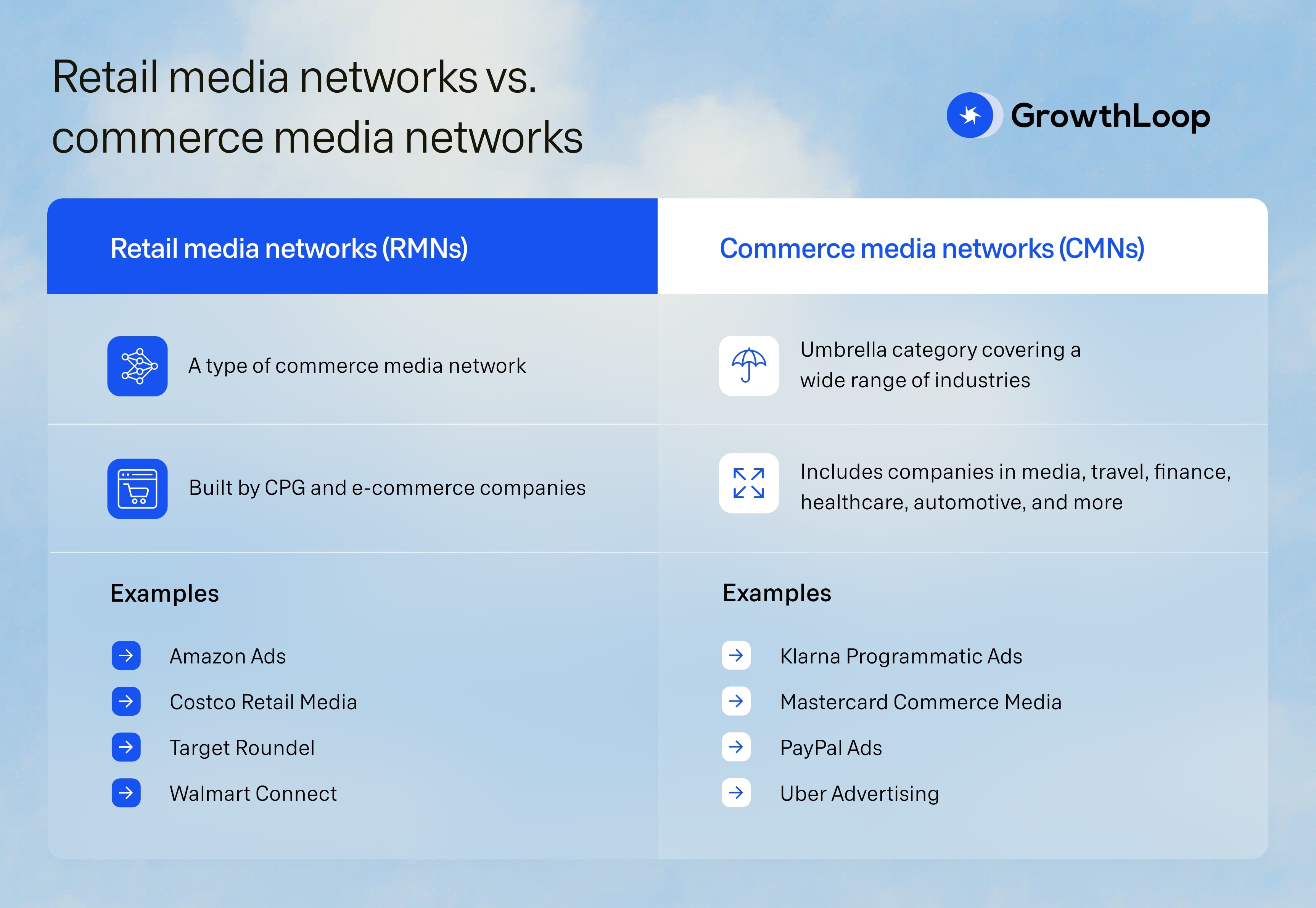
Comparison chart showing the difference between commerce media and retail mediaComparison chart showing the difference between commerce media and retail media

Retail media networks and commerce media networks explained

A media network is owned by an individual company — such as Amazon, Yahoo, Delta Air Lines, Walmart, or Mastercard — that sells advertising space on its digital properties. Media network owners are data-savvy and connect advertisers with potentially niche or hard-to-reach audiences. 

Retail media networks and commerce media networks operate in near-identical ways:

  • An organization sells digital advertising space to reach the organization’s customers on online channels (onsite and, increasingly, offsite) or physical channels (offline) — such as in-store endcap displays or advertisements at the point of sale — creating new revenue streams. 

  • Interested advertisers secure advertising space, which is guaranteed to reach buyers likely interested in their products or services. This increases their return on ad spend and can fast-track their access to relevant audiences. 

  • The seller’s audience has a better shopping experience because they receive ads and offers tailored to their interests, supporting a fully personalized buyer’s journey.

The main distinction between retail media and commerce media is the type of organization involved.  

  • A commerce media network is an umbrella term encompassing a wide variety of industries, including media, travel, finance, healthcare, and automotive. 

  • A retail media network is a type of commerce media network specifically for consumer packaged goods (CPG) and e-commerce companies.

Media network examples

Any organization with a mature first-party data strategy and robust digital footprint could generate revenue by creating a media network. Organizations seeking verified audiences to orchestrate omnichannel campaigns can also drive significant growth by advertising through a CMN or RMN.

Many of the world’s largest consumer brands manage RMNs, including these popular networks:

CMNs reflect a broader group of companies outside the consumer packaged goods space, including:

  • Klarna Programmatic Ads

  • Mastercard Commerce Media

  • PayPal Ads

  • Uber Advertising

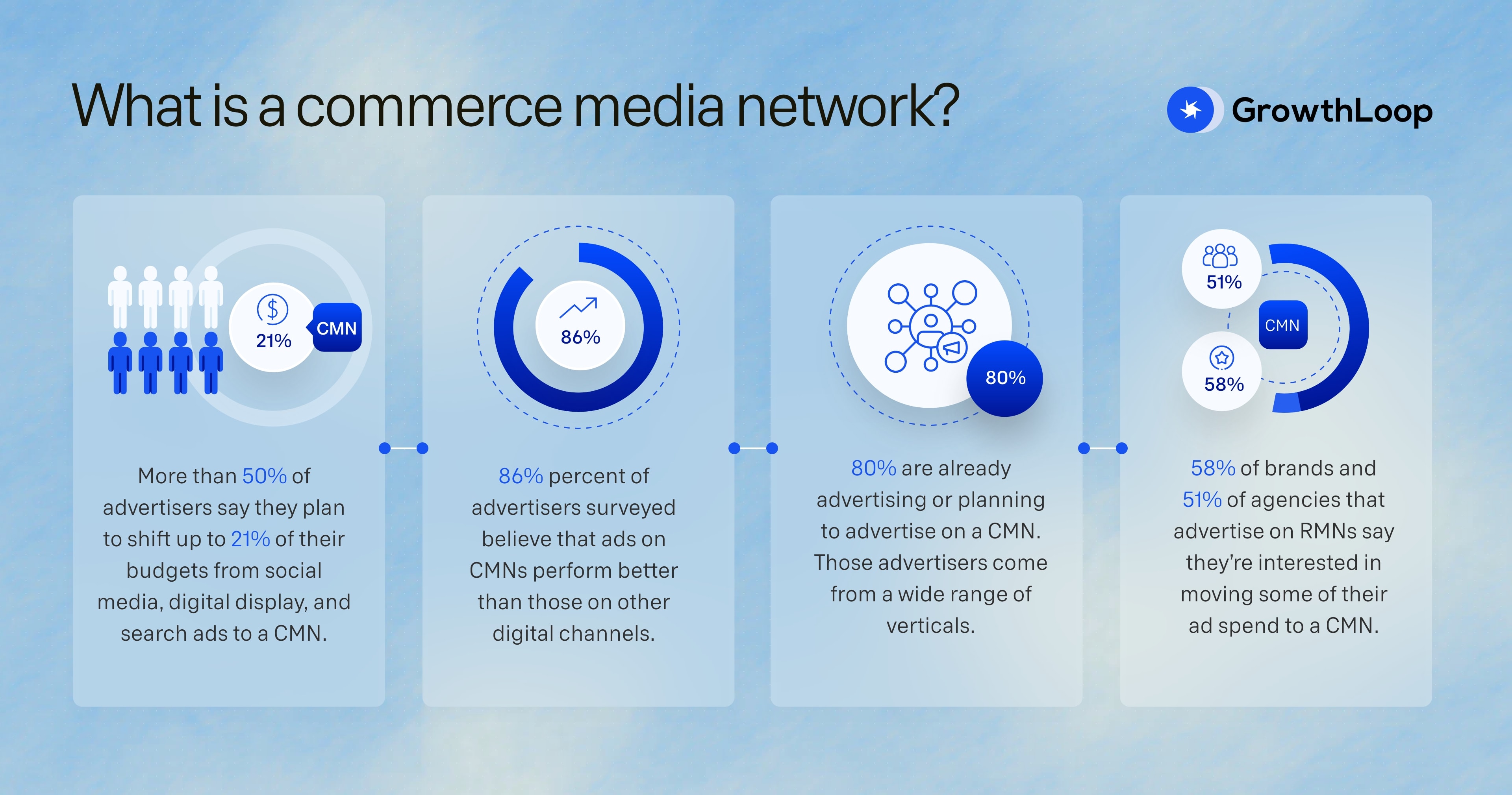
Marketers often engage with multiple media networks. McKinsey reports that 53% of advertisers use at least five commerce media networks, and 56% plan to increase their CMN spend. They also project that by 2027, CMNs will represent 22% of total advertising spend in the U.S.

Infographic showing statistics around commerce media networks, their usage and revenue potential.Infographic showing statistics around commerce media networks, their usage and revenue potential.

Why are media networks valuable to marketers?

CMNs and RMNs provide untapped value to marketers and unlock new revenue and high margins from a company’s first-party data.

Benefits of monetizing first-party data in a media network

Customer data collection is an ongoing challenge for marketing teams, especially as third-party cookies continue to depreciate in value and global privacy laws restrict how data can be used.

Organizations invest significant resources toward building their first-party data intelligence, and monetizing that data through a media network can drive significant revenue — Amazon generated $56.2 billion in advertising revenue in 2024, Walmart generated $4.4 billion, and Target earned $649 million. 

Beyond the monetary gain, media networks support a better shopper experience. Strategically placed advertisements help shoppers make informed decisions and become aware of complementary products they may not know exist. As media networks continue to mature and offer additional advertising opportunities throughout the buyer’s journey, they will provide even more value to customers. 

Benefits of advertising through a media network

Advertising through a media network can be a catalyst to reach qualified buyers compared to other paid advertising channels. The ads reach buyers during their shopping journey, which is when they are most likely to make a purchase decision and explore new options.

Media networks offer flexible options to reach highly relevant buyers, increasing the likelihood of conversion and boosting overall return on ad spend.
Media network use case examples

The following examples detail how organizations can engage with a media network to support their business goals.

  • An environmentally friendly skincare brand launching a new face wash could partner with Amazon Ads or Walmart Connect (or both) to reach interested buyers. The media network provides vetted audience information based on purchase history, including customers who commonly shop for skincare items with sustainability claims. The advertiser can target those customers on various channels, including on-site banner ads or mobile app push notifications.

  • An entertainment venue could partner with an airline to advertise to travelers who may be interested in sports or entertainment events. The venue could share promotions on in-flight menus and through the airline’s mobile app or website, including coupon offers after purchasing a flight ticket. This gives the venue access to guaranteed travelers who will be in the area, instead of running general promoted ads to people whose search history indicates they may travel to the area.

  • A hotel chain could partner with a rideshare platform to advertise services through the rideshare app. The chain could target customers who request a ride near a hotel location, either offering a room promotion or a discount for the hotel’s bar or restaurant. 

How will RMNs and CMNs evolve?

Although media networks primarily connect advertisers to digital advertising space, experts anticipate CMNs and RMNs will begin offering new content experiences, such as sponsored content on websites and more in-depth content opportunities beyond advertisements. 

Advertisers are also paying more attention to what features media networks provide. When assessing media networks, advertisers are most interested in robust campaign measurement capabilities, the ability to deliver personalized promotions based on data science applications, and to tap into social shopping environments. 

Challenges of running a media network

If you’re ready to build a media network or improve your existing media network strategy, there are a few common challenges you’ll likely face: 

  • Data governance - Sharing customer data with third parties requires extreme diligence and adherence to data privacy regulations. Maintaining real-time customer profiles and serving authorized segments to advertisers while preserving customer privacy can quickly become resource-intensive.

  • Data infrastructure - Modern media networks involve more than a simple data exchange. Your organization needs an efficient way to build audiences in real time and activate campaigns across channels. Advertisers also expect measurement capabilities to understand their campaign performance. Ideally, your media network should involve automated feedback loops that improve campaign performance while ads are still active.

  • Resource and expertise requirements - A media network is a living system that evolves and scales with your digital footprint. Advertisers seek solutions that consistently improve and generate undeniable value for their organization. This can make it difficult for organizations to keep up with competitors who invest in a better infrastructure for their media network.

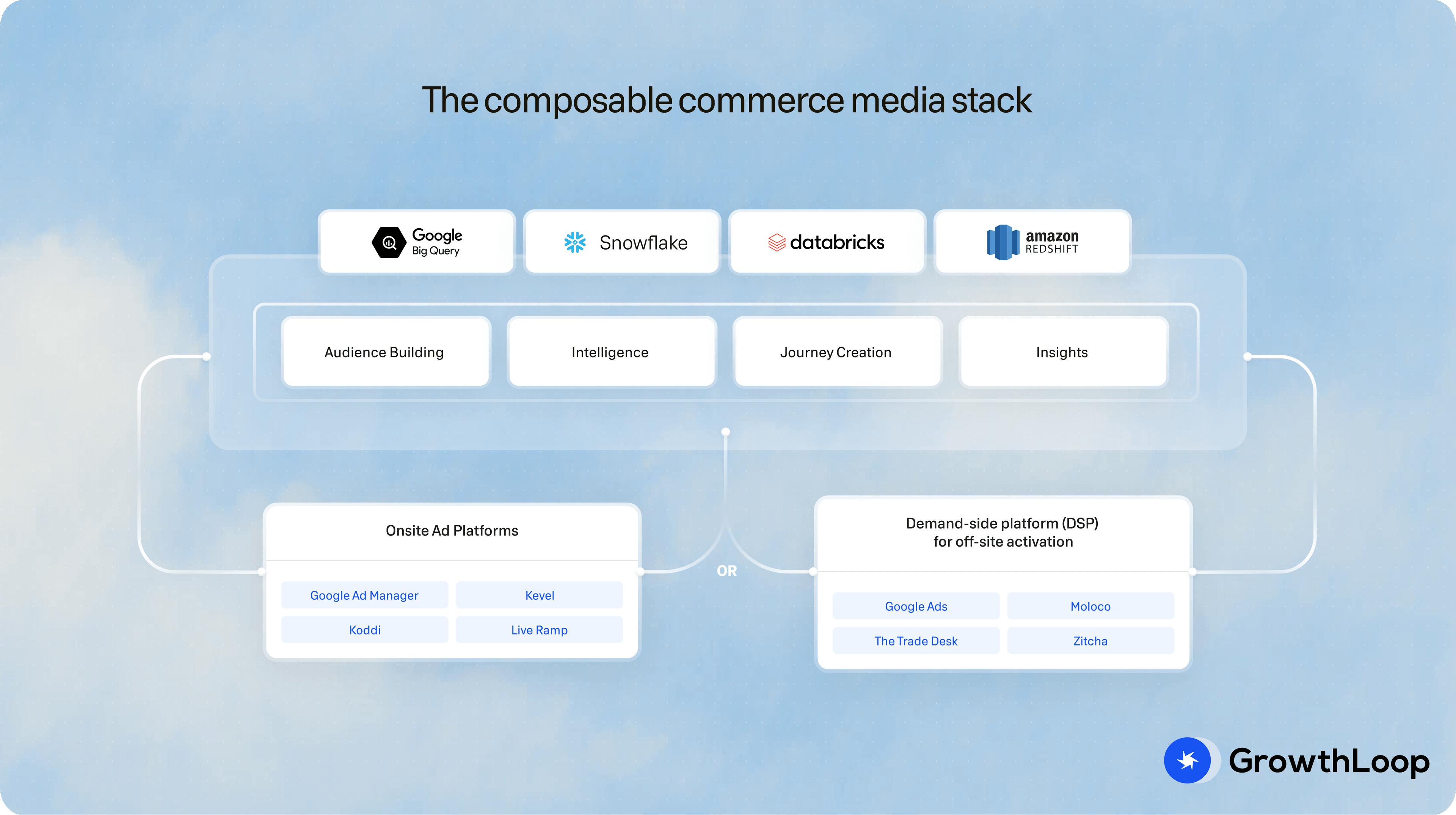
Fortunately, these challenges all share the same solution: Composability. Building your media network as a composable stack centered on a data cloud — which is your customer 360 — provides optimal data security features with flexibility to connect to any marketing channel. Composable solutions are built for modern technology realities, allowing you to combine the best-in-class solutions to quickly start, scale, and manage your media network.

Architecture diagram showing the tech stack of a composable CDP-based commerce media networkArchitecture diagram showing the tech stack of a composable CDP-based commerce media network

Building your first-party data hub

Whether your organization needs access to trusted buyers or is looking to monetize your first-party data insights, an RMN or CMN could be a catalyst to boost revenue and sustain your success.

The key to any successful marketing strategy is a composable toolset built to preserve your customer intelligence and activate data across every channel. GrowthLoop’s Compound Marketing Engine is an optimal solution to activate your data and provide self-service capabilities that preserve trust.

Learn more about the GrowthLoop Compound Marketing Engine for Commerce Media Networks solution or book a demo with our team today. 

More from the GrowthLoop blog

More data and marketing resources

More marketing and data resources

Sign up for the GrowthLoop newsletter

Loading form...